
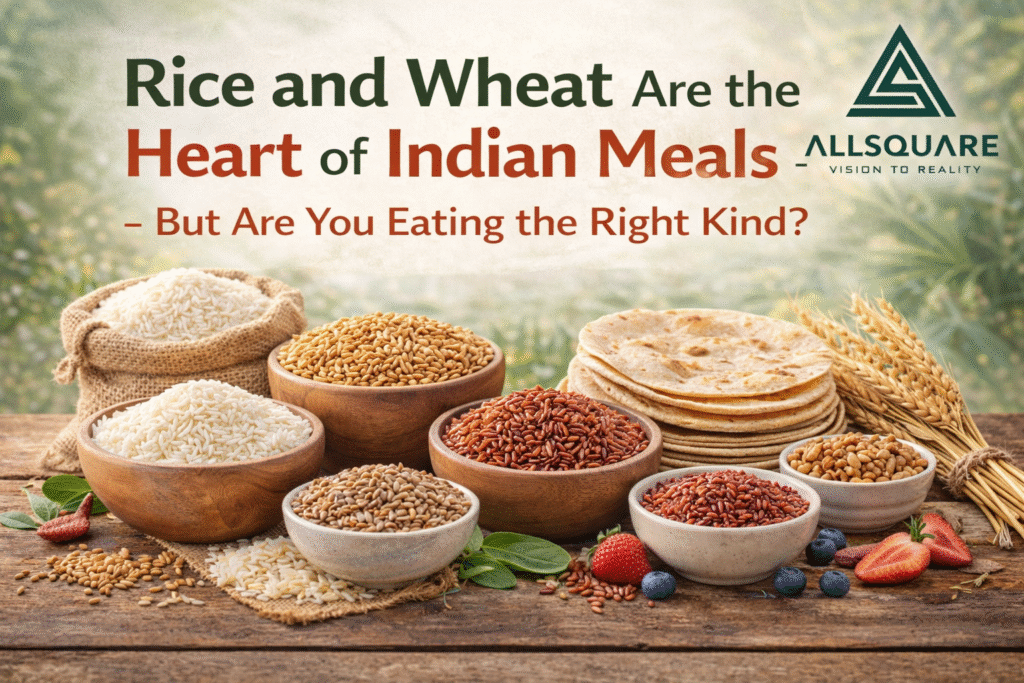
Across India, no matter the state, cuisine, or household tradition, two staples sit at the centre of our plates: rice and wheat. They are more than ingredients; they are cultural icons that feed millions every single day. Yet, with changing lifestyles, evolving nutrition science, and growing awareness about whole grains, many of us are beginning to ask a crucial question: are we eating the right kind of rice and wheat?
This conversation is not about removing these staples from our diet. It is about choosing smarter, healthier varieties and learning how small changes in processing and cooking can make a big difference to our long term well being.
Why Rice and Wheat Still Matter Today
In an era of quinoa bowls and oats smoothies, rice and wheat continue to dominate Indian meals and rightly so. They offer:
- essential carbohydrates for energy
- moderate protein
- dietary fibre (especially in whole forms)
- affordability compared to imported grains
- age-old familiarity with the Indian digestive system
Both grains are versatile, pairing well with dals, curries, vegetables, and dairy creating complete meals. Removing them entirely is neither practical nor necessary. The real question is: which type are we choosing, and how is it handled before it reaches our plate?
Rice: More Than Just White Grains on a Plate
When we say “rice,” most people immediately imagine polished white rice. But rice is not a single ingredient; it is a diverse category. There are dozens of varieties, each with its own nutritional profile and culinary use.
Many people don’t realize how many rice by-products exist as well, forming an important part of Indian households and industries.
Here’s a sample rice by products list commonly found in India:
- rice bran
- rice flour
- rice husk
- puffed rice
- flattened rice
- broken rice
- rice bran oil
These by-products support several sectors from cooking oils to packaged snacks and livestock feed proving that rice is not just a grain, but an entire ecosystem.
The Hidden Difference: Polished vs. Whole Rice
Polished white rice is the most consumed form because:
- it cooks faster
- it has a soft texture
- it stores longer
But polishing removes:
- fibre
- vitamins (especially B-complex)
- minerals
- antioxidants
This turns rice into a quick release carbohydrate that spikes blood sugar and digests rapidly leaving you hungry sooner.
On the other hand, whole or minimally processed rice varieties such as:
- brown rice
- red rice
- black rice
- hand pounded rice
retain more fibre, micronutrients, and natural oils. They digest slower, provide sustained energy, and support digestive health.
Does this mean white rice is harmful? Not necessarily. It depends on quantity, frequency, lifestyle, and health goals. For active individuals or labour-intensive work, white rice may still be suitable. For sedentary lifestyles or metabolic concerns, switching to whole varieties is wiser.
The Wheat Question: Refined or Whole?
Like rice, wheat undergoes processing. The modern Indian staple refined flour or maida is made by stripping away bran and germ. This eliminates fibre and micronutrients, leaving a soft flour ideal for bakery products but not very nourishing.
Whole wheat, however, retains:
- bran (fibre)
- germ (healthy fats)
- endosperm (carbohydrates and protein)
This balance provides better digestion, slower carbohydrate release, and improved satiety.
Yet, the right wheat choice goes beyond refined vs. whole. Even whole wheat varies in:
- gluten strength
- fibre content
- milling process
- freshness
Stone milled atta, for example, retains more nutrients than machine-milled flour.
Ancient and Indigenous Grains: A Forgotten Treasure
India has a long history with grains beyond modern polished rice and commercial wheat.
Traditional varieties such as:
- Khapli wheat (Emmer)
- Shahbad wheat
- Kattuyan rice
- hand-pounded local rice varieties
offer richer nutrient profiles and can support digestive health better for some individuals.
Khapli wheat, for instance, has lower gluten content and higher fibre, which can be gentler on the stomach.
These grains may cost more or be less accessible, but gradually reintroducing them into meals can create diversity and reduce dependence on heavily refined products.
How Processing Shapes Nutrition
Before grains reach our kitchen, they undergo processes such as:
- milling
- polishing
- bleaching
- refining
- parboiling
These processes impact antioxidants, fibre, cooking time, and taste. Understanding this allows us to make conscious choices rather than habitual ones.
For example:
- parboiled rice retains more nutrients than polished white rice
- stone-milled wheat atta preserves the bran and germ
- minimally polished local rice maintains more fibre
- Small differences add up over a lifetime.
Portion and Pairing Matter More Than Blame
Demonising rice and wheat is unnecessary. They become “unhealthy” only when:
- eaten in excess
- paired with too much fat or sugar
- replacing vegetables and proteins entirely
The right plate should look like:
- half vegetables
- one-quarter rice or wheat
- one-quarter protein (dal, lentils, chickpea, eggs, tofu)
Cooking styles also play a role:
- steaming
- boiling
- minimal oil
are better than deep frying or heavily buttered preparations.
Regional Nutritional Wisdom We Can Learn From
Many traditional Indian eating habits already balanced rice and wheat intelligently:
- South Indian meals combine rice with lentils (idli, dosa, sambar)
- North Indian meals pair wheat rotis with vegetables and dals
- East India uses puffed rice and flattened rice for lighter meals
- Coastal regions favour parboiled rice for better digestion
We can modernise these habits without abandoning them.
Signs You May Need to Reassess Your Rice and Wheat Choices
Consider reviewing your grain habits if you experience:
- frequent hunger
- low energy
- digestive discomfort
- rising sugar levels
- unintentional weight gain
Switching to whole or traditional varieties may help.
So, Which Kind Should You Choose?
There is no single correct answer. The ideal approach is:
- choose whole grains when possible
- mix polished and unpolished varieties
- diversify grain sources
- prioritize minimally processed products
For example:
- brown or red rice for regular meals
- parboiled rice for easier digestion
- whole wheat or Khapli for rotis
- poha or puffed rice for lighter meals
Balance, not restriction, is the goal.
Conclusion: Conscious Eating, Not Complicated Eating
Rice and wheat are the backbone of Indian meals and they deserve respect, not criticism. Eliminating them is neither required nor beneficial for most people. Instead, the focus should be on choosing the right kind, understanding processing methods, and paying attention to portion sizes and pairings.
With small, mindful changes, we can continue enjoying the foods we love while supporting better nutritional health.
The next time you cook rice or knead dough, ask yourself not whether rice and wheat are good or bad but whether you are using the best kind for your needs and lifestyle.
Because the heart of Indian meals will always beat with rice and wheat. The power lies in choosing them wisely.